
AI Reveals the Genetic Wiring That Rewires Alzheimer's Brain Cells

Nadia Chen

Alzheimer's disease remains one of modern medicine's most formidable puzzles. For decades, research has focused on identifying genes associated with the condition. Knowing which genes are present, however, is not the same as understanding how they commandeer the brain's cellular machinery.
A groundbreaking study is shifting that paradigm. Researchers have deployed a powerful new artificial intelligence system to move beyond simple associations. Their work maps the precise cause-and-effect relationships between genes in the Alzheimer's-afflicted brain.
This effort reveals the hidden control centers actively driving neurological decline. The resulting maps offer an unprecedented view of the disease's genetic circuitry, pinpointing the master regulators behind its progression. The research, led by epidemiologists Min Zhang and Dabao Zhang at UC Irvine, was recently published in Alzheimer's & Dementia.
Beyond Correlation: The AI That Sees Cause and Effect
Traditional genetic studies excel at finding correlations. They can show that Gene A and Gene B are often active at the same time in diseased tissue. This correlation does not prove that Gene A causes Gene B's activity, or vice versa. It is like seeing two lights flicker together without knowing which switch controls the other.
This limitation has obscured the true drivers of Alzheimer's pathology. The new AI platform, named SIGNET, is engineered to solve this problem. It integrates single-cell RNA sequencing with whole-genome data to infer direct causal links.
The system analyzes data from individual brain cells to construct detailed regulatory networks. SIGNET's algorithms are designed to handle the complex feedback loops inherent in biology. This allows it to distinguish a controlling gene from one that is merely a passenger in the disease process.
Mapping the Brain's Genetic Circuitry
The research team applied SIGNET to brain samples from 272 deceased individuals. These donors were part of long-term aging studies, providing crucial data on cognitive health. The analysis focused on six major brain cell types, creating a cell-specific atlas of genetic influence.
They constructed distinct regulatory networks for excitatory neurons, inhibitory neurons, and various support cells. This granularity is vital because different cell types contribute uniquely to brain function and disease. A one-size-fits-all genetic model fails to capture this complexity.
The maps revealed hundreds of "hub genes" that act as central regulators. These hubs exert influence over many downstream genes, forming the critical junctions in the brain's genetic wiring. Disrupting a single hub could cascade through the entire network.
The study validated these findings using an independent set of human brain samples. This confirmation step strengthens the case that the identified relationships are genuine biological mechanisms, not computational artifacts.
Neurons in Chaos: The Epicenter of Dysfunction
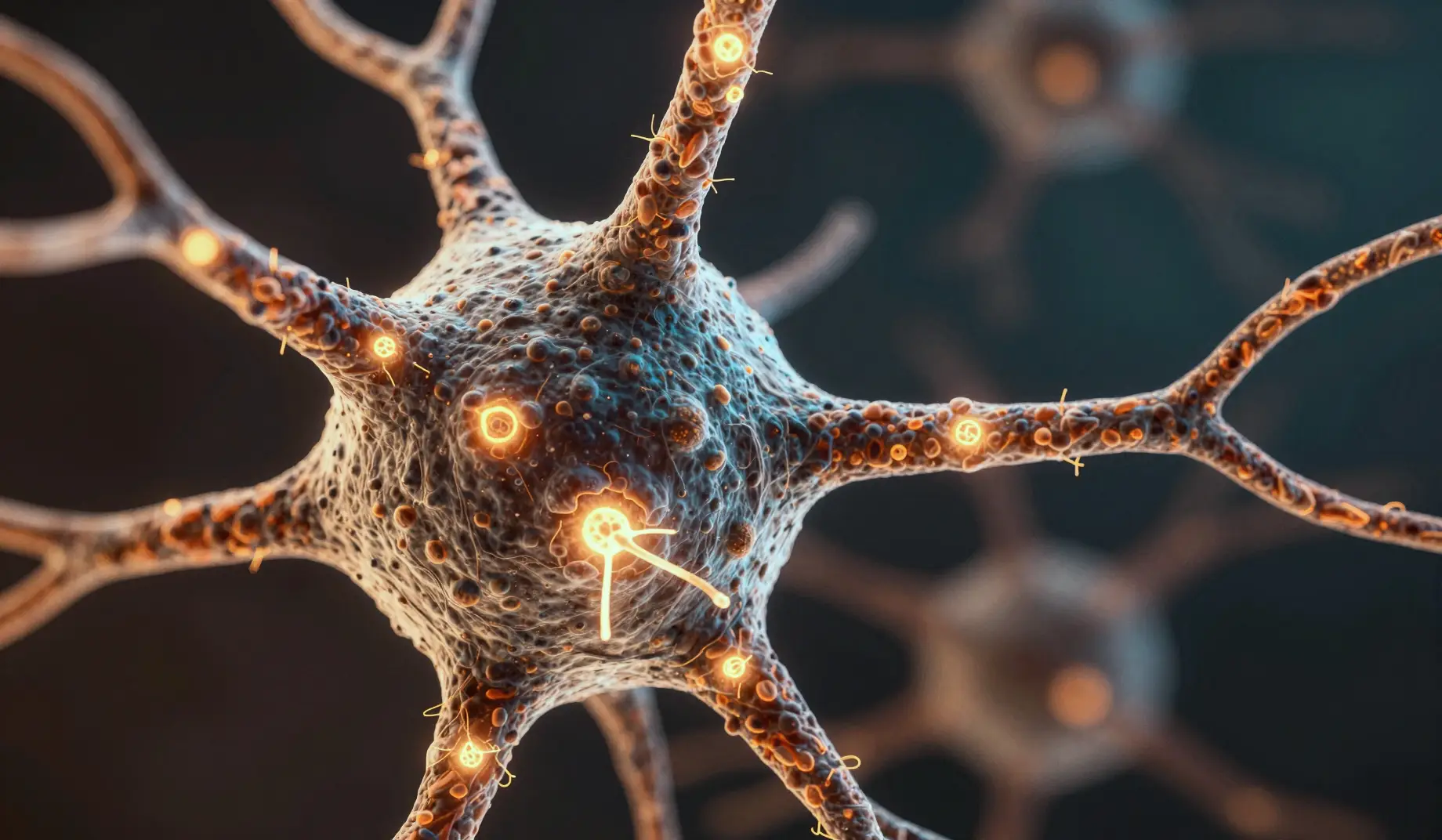
The most startling discoveries centered on excitatory neurons. These cells are fundamental for brain communication, sending activating signals across neural circuits. In Alzheimer's, their genetic regulatory landscape undergoes massive rewiring.
SIGNET's analysis identified nearly 6,000 cause-and-effect interactions that were extensively disrupted. This represents a profound reprogramming of the cell's core operational code. The excitatory neuron's genetic instruction manual is being rewritten by the disease.
This rewiring likely underpins the catastrophic loss of synaptic function and eventual cell death. It moves the pathology from abstract genetic risk to concrete cellular dysfunction. The maps show how known Alzheimer's genes, like APP, exercise new control in this chaotic environment.
The study found APP acts as a potent regulator in inhibitory neurons. This reveals a previously unknown role for a familiar suspect. It exemplifies how understanding causal control reshapes our view of established disease factors.
From Genetic Hubs to Future Cures
Identifying causal hub genes transforms them from statistical markers into tangible drug targets. A hub that actively orchestrates harmful pathways is a prime candidate for therapeutic intervention. Modulating its activity could recalibrate an entire network.
This approach promises more precise and effective treatments. Instead of targeting a generic inflammatory response, therapies could be designed to correct specific dysfunctions in specific cell types. The goal shifts from broad suppression to surgical genetic correction.
The research also opens avenues for earlier diagnosis. Detecting the aberrant activity of key regulator genes could provide a biomarker for disease onset long before symptoms appear. Early intervention is critical for a disease that silently progresses for years.
Furthermore, the SIGNET platform is not limited to Alzheimer's disease. Its ability to decode causal networks can be applied to cancer, autoimmune disorders, and psychiatric conditions. It provides a universal framework for understanding complex diseases at their root.

A New Roadmap for Brain Disease
This research marks a paradigm shift from observing static genetic links to modeling dynamic genetic control. The intricate maps provide a new roadmap for navigating the biology of Alzheimer's. They turn a list of suspect genes into a schematic of the crime in progress.
The findings underscore that Alzheimer's is a disease of system-wide network failure. It is not merely a few genes malfunctioning in isolation. The collapse stems from the corruption of the regulatory relationships that maintain cellular harmony.
Future work will focus on experimentally verifying these AI-predicted hubs and testing interventions. The ultimate aim is to develop therapies that can restore healthy genetic dialogue within brain cells. This represents a move toward disease modification rather than just symptom management.
By uncovering the hidden genetic control centers, science has gained a powerful new vantage point. The fight against Alzheimer's is now armed with a detailed blueprint of the enemy's command structure. This knowledge lights the path toward more definitive victories.
Sources
- Primary Study – Liu et al., Alzheimer's & Dementia (2026)Liu D, Jiang Z, Kim H, et al. From correlation to causation: cell-type-specific gene regulatory networks in Alzheimer's disease. Alzheimer's & Dementia. 2026;22(2). DOI: 10.1002/alz.71053
- UCI Official Press ReleaseUniversity of California, Irvine. UC Irvine-led team creates first cell type-specific gene regulatory maps for Alzheimer's disease. UCI News, February 12, 2026.
- EurekAlert Institutional ReleaseAmerican Association for the Advancement of Science. UC Irvine-led team creates first cell type-specific gene regulatory maps for Alzheimer's disease. EurekAlert!, February 12, 2026.